Nobody has to remember that Mavis' rabies shot expires in March. Kona remembers.
We love spreadsheets. Just not here.
Free for rescues. We host it and keep it running.
We love spreadsheets. Just not here.
Free for rescues. We host it and keep it running.
The toolbox
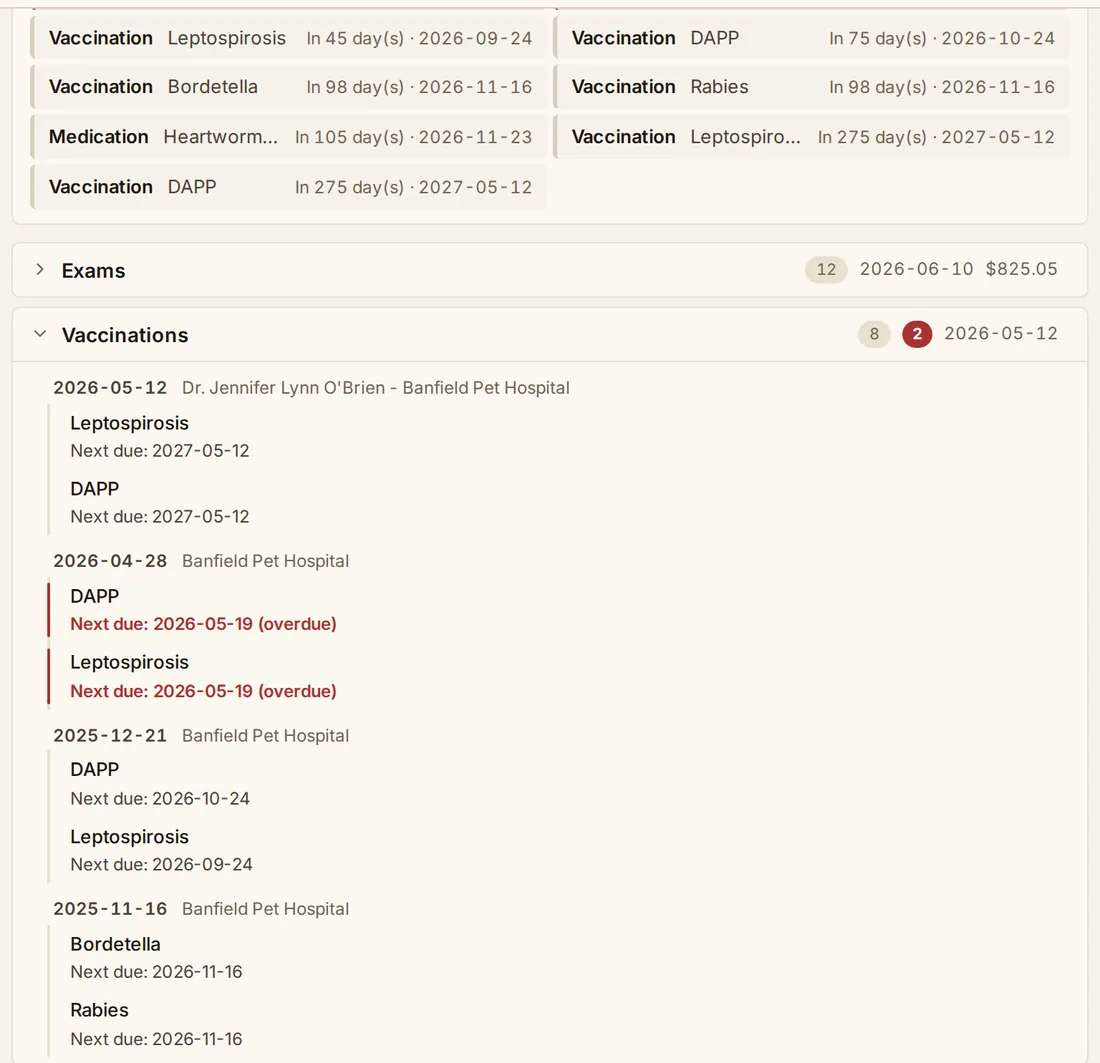
Medical history, behavior notes, photos, attachments, comments. Everyone on the team sees the same thing.
Submission, vet reference, phone call, home visit, fee payment, contract. Each applicant knows where they are.
Foster assignments, weekly check-ins, vacation coverage, volunteer signup, and hours logging. The people who help show up on one screen.
Send the applicant's vet a link. They fill out a structured form. You get the answer without chasing.
Donors tracked, gifts logged, adoption fees paid through PayPal, receipts on file.
Compose, pull photos from a dog's gallery, and save a template for the next adoption announcement.
Adopters search across every rescue in the network, keep one wishlist, and can share prior vet references with any rescue they apply to.
Adoption counts, donation totals, foster spend, medical costs. Monthly rollups, exported to CSV.
Report a lost or found dog, or search lost-dog listings by photo to help reunite a pet with its family.
Search by photo
We measured it
The best human writers still win, at 9.25. The AI is for the dogs whose bios nobody had time to write.
See it
Explore Kona
Kona is free software a small dog rescue uses to run its whole operation. For you as an adopter, here is what that means in practice.
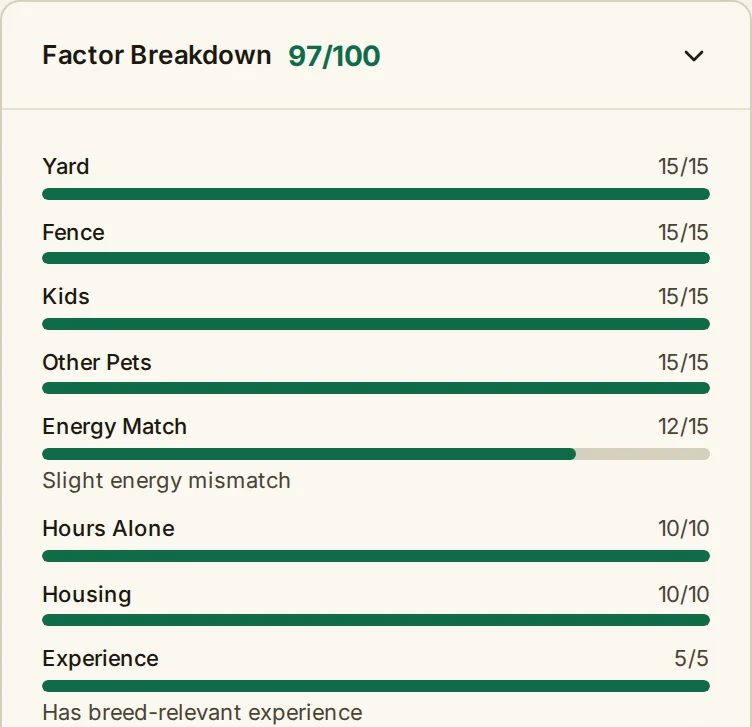
You browse the rescue's actual dogs, each one on a single page with photos, medical history, and behavior notes kept up to date by the people who know that dog. When you find one, you apply right there, and then you get a status dashboard that shows you exactly where your application stands: vet check done, phone call done, home visit Saturday. No more wondering whether your form went through. You can save dogs to a wishlist, message the rescue inside the app, and get an email when a dog matching what you want comes in.
After you take a dog home, it does not just end. Months later you send back photos and an update, a Happy Tail, and the rescue and other dog lovers get to see how the story turned out.
One more thing worth knowing: it is free, and the AI features run on the rescue's own servers, so your details and your dog's photos are not shipped off to some outside company.
A week with Kona
Three new dogs came in over the weekend. You get each one started in under ten minutes: photos, weights, the vet's name, whatever the intake volunteer scribbled down. You fill in the rest as you learn it. Each dog has a page the whole rescue can see, so you're not forwarding or copying anything.
One of your applicants refreshes her dashboard before bed. Vet check came back last week, phone call was Monday, home visit's Saturday morning. That's all she needed to know. No email chain. No "did you get my form?" text to a friend who volunteers at the rescue. She closes the tab.
An application came in for Rocco. You open it, send the vet reference form to the applicant's vet, and move on. When the reference comes back, Kona moves Rocco to the phone call and flags it. If the vet hasn't responded by Friday, Kona shows you that too, and you send a nudge from the same screen.
Porch. Laptop closed for the weekend, but Biscuit's check-in is due. You tap her name on your phone and write that she's eating fine but barking at the mail carrier. Next time your coordinator opens the app, it's there. No scrolling back through a hundred texts. No "did Lisa say what?" phone call.
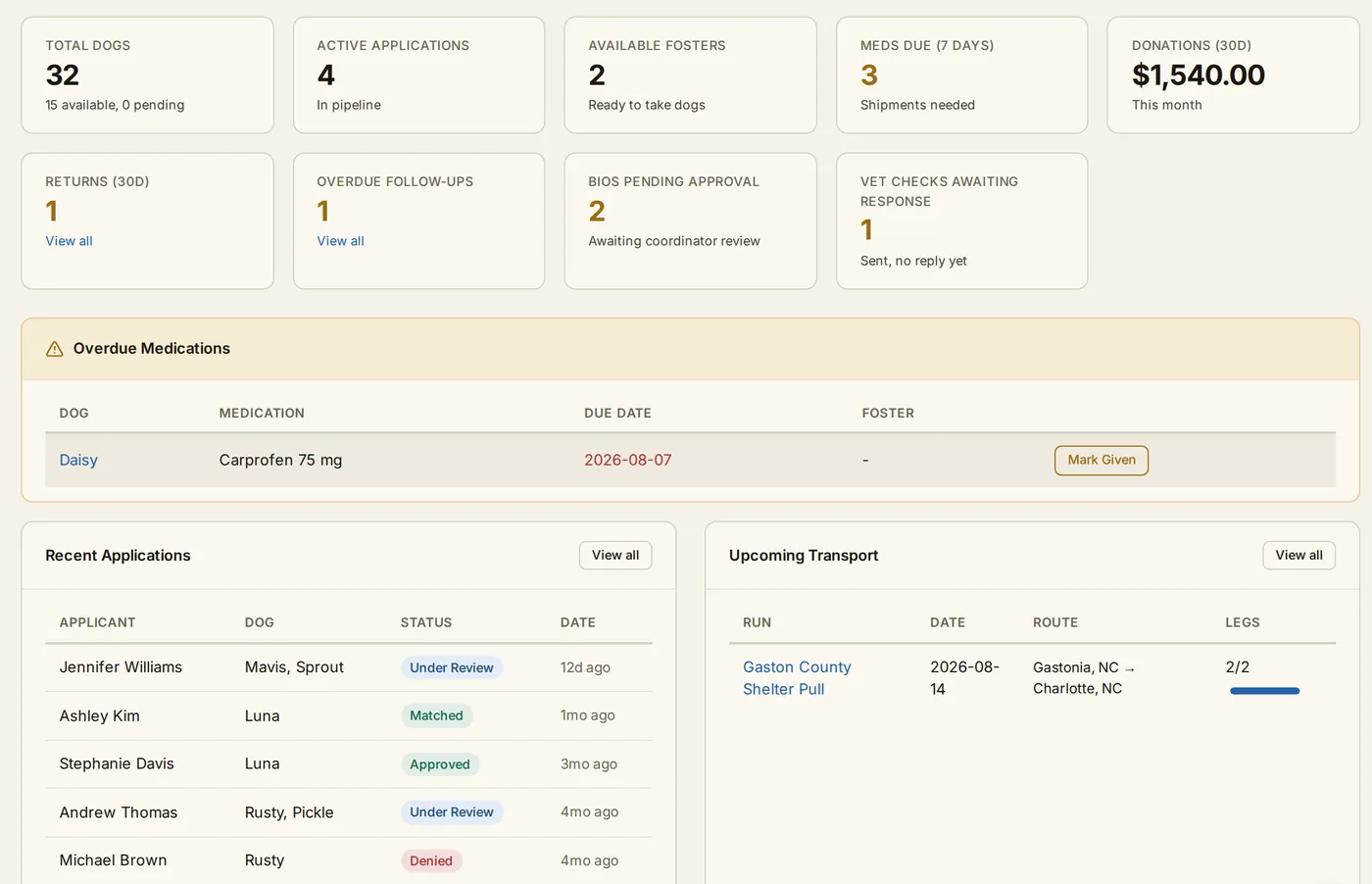
Twenty minutes before bed. You open the dashboard. Three vet checks waiting, one overdue foster check-in, two applications at home visit. You handle the overdue one with a phone call. The rest can wait until Saturday. You close the laptop. You go to sleep.
Your board treasurer opens the monthly report when she wants it. Adoption count, donation total, foster supply spend, fees collected. She doesn't have to ask you to forward a summary. You don't have to remember to prepare one.
The promises
The AI runs on our servers. Your dogs' photos, your applicants' personal details, and your medical records stay in our cluster. They never get shipped off to a third-party AI company or used to train anyone else's model.
No ads. No sold listings. The dogs you list on Kona don't get outranked by a rescue that paid for priority. Nobody is buying ad space on your adopter's face.
Your data stays your data. We don't sell it. We don't share it. If you ever want to walk away, we'll export everything and hand it to you.
Why free?
Kona is free for rescues. We host it and keep it running. If it helps you save more dogs and leaves you two hands free for belly rubs, that's the whole point.
There's no catch to find. Kona is run by the Kona Rescue Foundation, not a startup that owes investors a return. It lives on hardware we already own, and it's built by the person who answers your support email. No per-adoption fee, no setup fee, no ad space for sale. And if you ever want to leave, your data exports in one click. Leaving is easy. That's why you can trust staying.
Built with Python, PostgreSQL, and Kubernetes. Read about the AI work we're doing to help dogs get adopted.
If you run a rescue on your own hardware and you're curious about what the site is running on, there's an infrastructure write-up here. Written for tech people, not the faint of heart.